Analytics

Saturday, September 2, 2017

Helping students understand color in photos

 At my school I teach yearbook and journalism. I understand the different writing styles quite well, but I only have a very basic understanding of photography.

I had the opportunity to receive this book to add to my class room in exchange for honestly reviewing the book for others.

To really give you an honest review, it is helpful to know what types of audience you are.

Personally, even for just a coffee table book, I find these picture BEAUTIFUL. However, the book is intended to those whom have a DSLR camera and intend to plan and take great pictures in camera (rather than depending on Photoshop or another editing software).

As stated before, I am a beginner, but I found the different examples of photos easy enough and while I haven't tried everything personally the great thing about digital is I can try try again.

A couple yearbook students have already flipped through and one of them has already asked to take it home.

A great addition to any yearbook or journalism classroom and great for anyone else who just wants to have a better idea of taking better pictures with their camera.

You can purchase Understanding Color in Photography: Using Color, Composition, and Exposure to Create Vivid Photos from Amazon (affiliate link) or most of the big book stores.


Tuesday, August 22, 2017

Linguistic Card Game for students

When I have stations throughout the school year I enjoy adding a "fun station." I like to have it be somewhat literary or linguistic. One great game is Bananagrams and I just found out about a new one called Rewordable.

This is a great game for you to enjoy with family and friends, but more than that it's a fun way for students to take an intellectual brain break and think about words (which is key for yearbook and journalism especially!)

There are 124 cards consisting of single letters, blended sounds (ch), and full syllables (ine, age, etc).

The game starts with three cards and three tokens facing up. Then each person gets five cards. You make words with your cards and collect tokens if possible. Once you create a word, others can add to it and it turns into THEIR word.

It really is easy and we only looked at the directions twice the entire night! It isn't just the one with the most verbose vocabulary that wins. It takes some serious thinking and brain power to keep it.

Notes: If you are using this as a quickie with your students, I would not use the tokens. I would just have each student grab five cards and see what they can create.

I was lucky enough to get this as a freebie to try out in my classroom and leave an honest review. As a self declared word-nerd, I honestly love it. You can find it for sale at many big book stores (e.g. Barnes and Noble) I've also include an Amazon affiliate link below (if you purchase through this link I get a small percentage which I use for my classroom)

Sunday, August 13, 2017

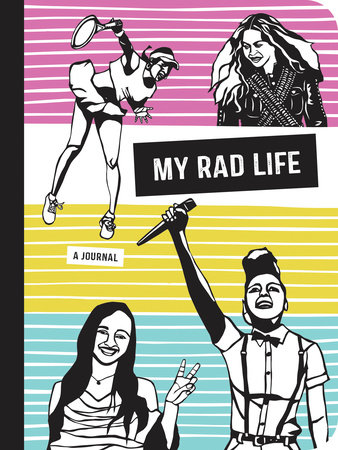
My Rad Life: Journal Review

There are more and more books today reminding students that they live in a wonderfully diverse  world. In fact the author of this journal have written quite a few books that focus on bringing attention a diverse variety of women wo otherwise live in the shadows of history.

This journal was created as a companion to those books (Rad American Women A-Z and Rad Women Worldwide). However, I own neither and find it great as a stand-alone.

Basically it's a guided journal that makes it easier to relate these larger than life women to students' own lives. AND in many cases introduce them to women who they probably haven't heard about in the classroom.

There are pages for drawing, doodling, and sketching...and pages with lines for writing. There are prompts based on quotes encouraging them to write about their own life or draw how they see themselves today.

The people vary from BeyoncĂ©, who let's face it they already know to Agnes Varda (a European film maker).
 
In my mind, the journal accomplishes three tasks:
1. It gives students a touch of history and may ignite a curiosity in something or someone bigger than their life.
2. It helps students get to know themselves at a deeper level
3. It can have students create connections with people they otherwise distant from

As a teacher, I LOVE this book as inspiration for my own journal bell ringers. I plan on gifting it to a student I know who has a love of history.

I was lucky enough to get this book in exchange for an honest review. If it seems like something you're interested in, please check out three of Kate Schatz's books (including this one!) below. The below links are Amazon affiliate links. Regardless, these are 100% honest.

Monday, July 31, 2017

Four fun ways to start a new school year


Looking for a great first day of school? Here's a piece of advice. DON'T just have them read the syllabus!


Here are some alternatives for a memorable first day that gets you off on he right foot with your students and sets clear expectations for how you want the class to be.
  1. Zombies!
    • What is it? Yes, I said zombies! One of my FAVORITE first day of school activities is having students work in groups to defeat the invisible zombies that are taking over the classroom. Interested? Read more here.
    • What do I need? This requires no technology but you do need some set up. Easily adaptable if your number of students changes. You can photocopy the reflection questions at the end or if you have a projector project them on the board. I usually upload them to my LMS (PowerSchool) and have students submit work there. If you plan on using tech I'd have some paper for back up (first days are chaotic) 
  2. Have a snowball fight
    • What is it? Get to gauge your students writing style, let them throw things, recycle paper and have them get to know a little about their classmates. More about the ABCs of me here
    • What do I need? This requires no preparation and no technology. You can use scratch paper, computer paper, lined paper. Very easy for a first day.
  3. Have them present you to their classmates
    • What is it? Rather than give the students the story of your life, see if they can figure it out based on what's in the classroom. They work with one another, and ultimately present you to their peers. Full blog post
    • What do I need? Your classroom needs to be pretty set up for this. So if they've moved you into an empty room, this isn't the best activity. Otherwise, this is a no-prep, no tech activity.
  4. Do lots of little tasks
    • What is it? Stations are a great option for the first day! I like to have my students do a little of everything
      • Read the introduction to the first unit in the textbook and answer some basic questions. 
      • Play a couple games on quizlet to see what vocabulary they already know
      • Do a mini-scavenger hunt in the syllabus
      • Draw a picture of their goa for this year and under it write three ways they will achieve that goal. 
      • Have them do something partially related to your first unit
        • e.g. World Literature usually starts with the hero's journey so I have a section where they need to pick which hero "doesn't belong" and defend it
          • For example with: Iron Man, Thor, Spider Man, Batman a student could say: "Thor doesn't fit in because the rest are humans" or "Spider Man doesn't fit in because he's the youngest."
        • The big fun with this one is that they CAN'T be wrong. It's practice to think critically and not be afraid to just guess.
      • Create a small video about their name (blog on this to come!)
      • etc.
    • What do I need? It really depends on you! How big are your classes and how much time do you have? My stations are usually pretty low maintenance. Each station gets a letter with a series of related questions. Students complete each station on their own worksheet or the (usually recycled) sheets of paper provided at that station.
What do YOU do the first day of school?

Wednesday, July 26, 2017

Have your students introduce YOU to the class

So many teachers right now are asking about
that first day of school. I thought I'd make a quick blog post with a fantastic no-prep, no tech option.

I can only do this one in the summer with incoming freshmen as during the school year I have too many students who already know me (because I taught them during the summer).

Many teachers do this with a fancy handout or PowerPoint. Since I never know the status of my classroom the first day (e.g. How many students? Will I have technology?) I keep this no-prep and easy.
  1. I warmly welcome students to my class and ask them what kinds of things teachers usually share about themselves the first day. As they give me answers I write them on the board
    • Home city, If they have kids, Professional background, etc.
      • If students don't guess right away you can nudge them, but I usually get a pretty good list.
  2. We sort the list into three different categories
    • Usually we get something like:
      1. How does she teach?Teacher Type
        • We tie this into rules and expectations too.
      2. What has she done? Background
        • Professional, Personal
      3. What does she like and dislike? Personality
        • I have LOTS of "me" around the class, if you don't you may not want to include this.
  3. I pass out scratch pieces of paper and tell them to walk around the classroom and find any evidence they can that shows them who I am as a teacher. 
    1. Depending on how involved they are, I usually give about five minutes.
      • If they're just sitting or staring at one spot. End it sooner. But they're usually into it.
    2. You may need to set more guidelines depending on your privacy. I let them open any drawer that is unlocked and have even had a (rather brave) student ask if he could look in my purse. I allow it! 
  4. Stop the class and have them see what evidence someone else collected. Sharing is caring!
  5. Tell them now they are going to take the evidence and explain how it tells them who I am. I usually give an example
    1. Ms. Peck has almonds on her desk. This tells me she is trying to eat healthy.
    2. I also model using different evidence to support the same conclusion: Ms. Peck has almonds on her desk and bike pedals under it. This tells us she wants to be healthy.
    3. As I say this I also write it on the board. Then I erase my specific terms and the students are left with a sentence frame: Ms. Peck has _______ This tells me ______.
  6. As this is a little more intense, they'll be in groups (I like my groups of 3-4 students so divide appropriately) I also assign each group a category: personality, teaching, background
  7. Give them some more time (2-5 minutes) to gather more evidence now that they have a category and goal.
  8. Encourage students to focus on the evidence they have to create a mini-presentation on what type of teacher Ms. Peck is.
  9. Students present!
    1. As students present I praise them for their conclusions even if they are wrong..
      • Example: I had a student infer I was Native American because of my complexion and the dreamcatcher in my class. I shared I was Mexican and the dream catcher was for a different reason. Then as a class I tried to get them to guess (I taught American literature)
    2. Other times they are right but their evidence doesn't support it.
      • Example: I had a student infer I loved to travel because of my travel signs in the classroom (that pointed to Rome, London, etc.) I explained those were because I teach World Literature and asked if anyone saw any evidence that I love to travel other that those? (My diploma from Spain, the picture of me riding an elephant)
  10. You're done! Congratulations you had a first day where students got to:
    • Work in teams
    • Find evidence
    • Think critically
    • Make inferences based on evidence
    • Learn about you
    • Move around
    • I feel awkward calling this student centered, as it's all ABOUT the teacher, but the students do all the heavy lifting.
    • And had fun! 

Wednesday, July 19, 2017

Ten tips to flawless writing

Four years ago I wrote a guest blog post for learnemy. They are no longer around, so I thought I'd share the original post here:


As an English teacher it is easy for me to correct students' work. It is harder to teach them to correct their own work. Throughout the years I've picked up tips and tricks that help them avoid mistakes, and catch / correct them once written.

Proofreading isn't as easy as you may think. Tihs shwos your mnid is asoewme. Have you seen that before? It suggests that with only the first and last letter in the right place your brain will find the context and fix it for you. It is always harder to proofread your own work than someone else’s, but sometimes it must be done! How on earth can you proofread your own work?

Below I cover the best way to write a document. Understandably you can’t always follow these steps from start to finish, but ideally you would be able to do so.


1.   Hand write the first copy
a.  What? Who writes anything anymore? I know this seems antiquated but when you write with a pen or pencil silly typos are less likely to occur. Most people also type faster than they write, so by writing you are forcing your brain to slow down and form more accurate sentences. 

2.  Know what you are looking for
a. Different documents have different things you need to keep in mind. A formal essay should avoid first person, contractions and slang whereas an e-mail could include all of those (depending on your company). Be sure you know the style rules you should be following and keep these in mind for the next steps.

3. Type it up and use a spelling and grammar check
a.  Most computers come with a grammar check. Make sure yours is set up in the right language and use it! Do NOT just click, “OK” to everything. Read the options, the explanation and ONLY if you agree change it. Sometimes you may agree that it is wrong, but not in their corrections. That’s OK; rephrase it however you like. If you aren’t sure consider re-writing the sentence a different way regardless.

4.       Get some distance
a. Re-reading something five minutes after you wrote it will rarely yield amazing results. Coming back to it the next day (or longer) is better, but if you absolutely must send it off that same day take a break before you re-read it. Stand up and leave your computer / desk. Get a cup of coffee. Talk to a friend. Get your mind off the document. 

5.       Print it out in sections
a.  I love trees as much as the next person but most people will find more mistakes on paper than on a screen. Use recycled paper if it makes you feel better.

b. If you are proofreading a longer document try to check it in chunks. If you aren’t used to proofreading and you attempt to do it all at once you will likely get tired halfway through and stop noticing as much. It is better if you can divide it into smaller parts.

c. Another option is to read it all at once but only focus on one thing each time. For example: This time I am only looking for run on sentences. Note: This is harder to do!

6.       Read it out loud like you did when you were a child
a. Do you remember when you were little and you read with your finger on the words? This is called tracking. It is helpful to track when you grade your own work because your brain has to register every word. You can’t skip a word or phrase. This is especially useful with unneeded words you will hear as wrong (but only if you manage to say them!).

b. We often hear mistakes before we see them. Did you run out of breath before the sentence ended? It’s probably a run on sentence. Does something just sound awkward? It probably is!

7.       Make it bleed

a. Did you know that many teachers nowadays are being told not to use red pens. Some studies suggest that teachers are too negative when they use a red pen compared to other colors. Embrace this! You want to spot all the mistakes you can so use a red pen and get that edge.

8.       Read your document backwards
a. Backwards document your read? No, not like that. When you read from the top to the bottom your brain starts auto-correcting what it knows you meant to say. By reading the last sentence, then the second to last, then the third to last etc. your brain won’t anticipate the next step and you’re likely to find more mistakes. This is hard the first few times, but it does get easier.

9.       Embrace technology!
a. If you notice that you are frequently using the wrong word (e.g. there instead of their) jump on your computer. Find (Ctrl+F) all uses of your incorrect word and check them all at one time. Also take advantage of tech tools to check your writing.

10.   Rest and Repeat
a. A good job is never done, as stated before it is really best if you let your text rest in between readings. Even if you think you are done take the longest break you can, check it one more time, and then send.

There we are! Ten easy ways to proofread your own document. Whenever possible I suggest you find a trusted friend, colleague, old teacher, or relative who will look over your work. An extra pair of eyes always helps. However, if you are unable to do so, following these steps should make sure that your document gets as close to perfect as you can get it.

Sunday, July 9, 2017

Using tech to help students review their writing


One of my big focuses as a teacher is giving students tools they can use without me. I've given many students checklists and models that they have later thanked me for as they used them throughout many later classes.

Besides those paper tools, I also give my students some electronic tools for reviewing their papers, e-mails, articles and really any written work. None of these are a replacement for a second set of eyes, but it is nice to have technology help out.

Most of these are Freemium meaning they offer services for free, but offer more or better services (without advertisements, less wait, etc.)

Below I'll give links and brief descriptions to four sites I give my students. Try them out with your own writing and share them with your students! I bet one or two of them will thank you.


1. Grammarly

If you sign up here you get to try Premium for a week (full disclosure I get a free week if you sign up with this link). Premium is nice, but I find the free version is definitely great too.

There's a Grammarly browser add-on (for Chrome, Firefox or Safari), a Microsoft Word add-on, and students can go to the site and copy and paste text to check it.

My favorite part though, is the weekly e-mails students get. Grammarly sends an e-mail once a week that lays out spelling and grammar issues they encounter most often.

Students can combine this with NoRedInk and practice any grammar skills they still struggle with on their own.

2. PaperRater

This site does have a lot of ads, but it's a great time to teach some digital citizenship in being careful what you click on. Students copy their text and then go to PaperRater. Once there, they paste their text into PaperRater filling out their specifics (type of text, grade level, etc.). The site looks at several different elements: Spelling, Grammar, Word Choice, Style, Vocabulary and Words. Then it gives a grade.

Obviously, this isn't perfect! For style it looks a lot at transitional phrases. For Word Choice it basically identifies words like "a lot, I don't, big, don't, get, really, many, am, go, most" and reminds students to consider other words or use a thesaurus.

A big thing to go over with students is that the grade is automated and that it definitely isn't a crystal ball that will predict that grade they earn.

3. Hemingway Editor
Reminding students that bigger isn't always better, Hemingway looks at sentence length, adverb usage, passive voice, and just awkward phrases to make writing easier to read.

While PaperRater also looks at sentence structure, most students get focused on the spelling, grammar, and grade. Hemingway focuses exclusively on structure. Spelling and grammar errors are irrelevant.

Hemingway Editor is definitely a site worth introducing to students. There is a time and a place for adverbs, passive voice and complex sentences, but this site's easy color coding can help students see if they have too many of one color populating their essay.

4. The Writer's Diet
Last but not least, there's The Writer's Diet. Based on the book by the same name, the site encourages writers to have "fit" writing rather than "flabby" writing.

After copying and pasting a text, students' are given a bar chart detailing a breakdown of their text and then the text itself.

There you are! Four more digital tools that students can store in their toolbox.

I am always sure to discuss all of these with my students. In fact often when first introducing them I have them run their text through and make changes. Then they give me a little write-up  which site they used, what was helpful, and what was not so helpful. This helps build a critical eye and students get an idea of when to use which site.

These are meant to be helpful tools, but they should be used with a critical eye. These are all automated and none of them perfect!

Do you know of any others I should add to my list? Have any experience you'd like to share? Let me know in the comments!

Sunday, April 16, 2017

Background Noise Perfect for ANY Classroom

Working on a project? Giving students time to brainstorm or write? Have one or two students that just can't concentrate with the noise from a neighboring class or that constant flickering light?

It sounds like you're in need of some productive background noise! Here are FOUR easy and scientific options for you to use in your classroom.

1. Birdsong

From what I understand, this is hardwired within us. Birds chirping let us know that everything is OK. Or in survival terms: there are no predators around. The world is safe and we can focus.

So by putting some bird beauties on in the background, you are giving students background (and maybe drowning out the annoying sound your lights make) while letting them subconsciously know that they can focus.

This also helps them connect to nature (albeit superficially) which may be more than many get!

I like the below because it isn't looped, it is real and it's long enough for one class (even if you are on block schedules)


Sources:
BBC - The Surpising Use for Birdsong
Julian Treasure- The Benefits of Birdsong

2. Video Games

Stick with me. What is the purpose of music in video games?
  • To be in the background (i.e. not distract you)
  • To keep you playing (i.e.  not sleeping to your classical music)
More and more people are finding that video games in the background are doing it for them! I've read some suggestions that this is MORE effective if you have played the video game since then your brain connects the music to the feelings you had while playing. So you may want to ask students what games they play and see if you like any. As a game-boy fan of yore, I am putting Mario Brothers below for your perusal.

Sources:
Is Noise Always Bad? Exploring the Effects of Ambient Noise on Creative Cognition  (Doesn't specifically mention video games, but ambient lyric-less songs)
The New Playlist for more Productive Work

3. Brown Noise

What? I thought it was white noise? Well, that's one option. There's also pink noise. I find most of my students prefer the slightly deeper sound of Brown noise, but it's really personal preference.

If it just sounds too much like static to you, this is very similar to teachers who like playing waterfalls or running water (I tend to avoid these my school has strict one-at-a-time bathroom rules that running water make difficult to enforce).

This is a calming noise that's great for getting your higher energy students to settle down and focus on the activity in front of them.

Sources:
Is Noise Always Bad? Exploring the Effects of Ambient Noise on Creative Cognition  (Doesn't specifically mention video games, but ambient lyric-less songs)
The New Playlist for more Productive Work


4. Student DJ

Give the students' choice! This is a great (and free) prize if they're awesome. Have them make the (school appropriate) playlist.  If you can view YouTube have them send you a link. If not, play from their hone's directly.

The science here has nothing to do with the music they play, but the fact that they feel they have a say in what happens in the classroom.

Involved students are focused students.

There are definitely more options (especially the seasonal ones) but these tend to be my go-tos. What do you like to have playing in the background?

Saturday, January 21, 2017

Poetry stations

A snippet from students at different stations
I really hate delving into a unit immediately after break. I have foreign exchange students who usually miss the first week back, students transfer from other classes, and they aren't always back in the educational groove right away.

This year, before getting back into poetry, I spent a day helping students start their year with no regrets and learning about their poetic pasts.

Then we jump into poetic stations. I've done stations before but this time I set them up slightly differently than I normally did. Stations were throughout my classroom more or less in a circular arrangement. Students started at one station with a partner. After about seven minutes, students were able to move on. Before moving on, one student at each station moved to clockwise and the other counter-clockwise. This way they are able to work with different students throughout the day. It also meant for new students, they got a chance to meet everyone in the class (be it only for 5-7 minutes).

My poetic station this year varied a bit from last year because I built off of what they revealed in their poetic journeys.

Students racing with Quizlet!
  1. Students expressed fear over needing to know literary terms. So, another Station was two of my yearbook computers set up with a Quizlet Figurative Language set. Students made note of words they didn't know, and raced their partner for the fastest time. Many students said that they were impressed by how many of these words they already knew. 
    • This was effective because students expressed a fear of needing to remember all of the literary terms. This showed them that they already knew many of them as we'd used them the previous semester. The students that were less sure have access to this Quizlet and can practice on their own in free time or at home.
    • This was hit or miss as far as enjoying it. Some students LOVED it because they races with their partners. If they weren't close with their partners then they enjoyed this station less. 
  2. Several students said that poetry is old and no one talks like that anymore. So, one of the stations was "Hip-Hop or Shakespeare" inspired by Akala's TED Talk. Students looked at lines either from a song or Shakespeare and talked to their partner about which one was which and why. After writing down their guesses, they got to see the answers.  Then they wrote one more response about which one surprised them more and why. This helped students see that we still use vocabulary like this today and poets from the past discuss topics we find just as passionate now. 
    • As I circulated the room I heard some great discussions here!
  3. Another common thread was students said they didn't understand what made a poem good or bad, so at another station they watched a clip from the Dead Poet's Society. They summarized it, said what the teacher felt about poetry and stated if they agreed or disagreed. 
    • This was a close second for their favorite station. Students thought the scene was very funny, and they agreed with the teacher.
    •  
  4. To get a little more non-fiction in, they answered questions from a non-fiction text about science and language arts being mutually exclusive. Not only did they practice SAT-like questions,  but they read more about the information emphasized in their textbook. 
There were a few other stations (based on the textbook and rhyme scheme) but these haven't changed in the past few years. The stations mentioned above were specifically added (or altered) based on students' poetic journeys. This was a great way to ease them into poetry and students could tell that I took time to cater to their needs, and that they appreciated.

Saturday, January 14, 2017

Using Prism with Poetry

I teach "The Rubaiyat" to my World Literature class. I LOVE IT. I love introducing students to poetry from so far away and so long ago that still has messages for today.

However,  it is an older poem that takes a bit of work interpreting, and for many of my transfer and exchange students, it serves as their first official poetry lesson. So, before we jump into the world of Persian Poetry, we start with something a bit easier: Bon Jovi's, "It's My Life."

My class experiencing Bon Jovi.
Despite being so old there's a pager in the music video, students really like this song! Plus the message is very similar to The Rubaiyat, and it's filled with figurative language.

We start by watching the music video and talking about what the "plot" is. Then we review literary devices and on their own students find as many of them as they can. Ater five minutes I let them pair up to compare and share. Finally, ONE of them gets out a computer, and they head to Prism and create an account.

Then I share this link where I uploaded the lyrics to the song and picked three different categories. You could make these whatever you wanted. I've done this with connotation (positive, neutral, negative) and literal vs. figurative language.

After a quick demo, where I show students how to highlight, erase, and switch highlighters, they are on their own! I have them go through the poem. With a partner, they decide what color different sentences and phrases need to be highlighted.

In this case, I made it a little tricky. I didn't just mark things metaphors or similes I moved those into different categories (figurative language, clever writing, word choice). This meant with some things (like allusions) they had to figure out where it fit best. Once they finish they click "Save highlights."

In the end, you can show the visual representation of what everyone marked. It highlights the words according to the majority. So you can see in the example that gonna is marked as figurative language by most students. However, some marked it for word choice and some clever writing.

This provides a great visualization and allows us to discuss this as a class, which we did. Students pointed out that gonna was a great example of informal diction making this a very informal.

Overall this is a very easy to use

Now, some teachers consider a flaw of PRISM to be that you can't see what each student did individually. That's true! If you really want to see what each student did you can have them screen shot their page and submit that to you, but I care more about the quality of conversations they have with their partner. So more than needing to see what they highlighted, I walk around and make note of their discussions.

Saturday, January 7, 2017

Create Class Culture and Flush Regrets Down the Toilet


To start this activity students entered class with a "to do" list on the board. Each student desk had two markers and two to three squares of toilet paper.

Step 1. The "To Do list" on the board had four steps
  • Sit where there is toilet paper (do NOT, crumple, play, or blow your nose with it)
  • 2016 review
  • Field Trip
  • Start 2017
Students took their seats and I explained that I know a lot of them had an amazing 2016, whereas others may have some regrets.


I showed them my piece of toilet paper which said "Procrastination." I explained that procrastination was a real regret of mine and I felt that if I had managed my time better, then I would have had a better 2016. As a result, this year I vowed to get started on things as soon as they were assigned.

Step 2. 

I gave students some time to write down their own regrets and then they had the option to share. Students were invited to share as much or as little as they wanted. Some students talked for quite a bit, and others shared just a word or two.

As they shared, I'd ask who felt similarly, and what solutions we could offer that would help all students.

This is an important part because we are building a class of empathy and helping. We relate to one another and our struggles and share our experiences to improve everyone's life.


Examples:
  • They regret eating so much junk food
    • Eat more food from home.
    • Bring less money to school
  • They regret not doing their homework
    • Actually writing down assignments in their planners
  • A few of my exchange students regret choosing to study abroad. (sad!)
    • We talked about why they regretted it. They missed their family. Speaking in English all the time was hard. While some students had some advice, I think overall it was a good chance for them to empathize with another student.
  • Less social media
    • I shared a few add-ons that I like (like Dayboard which makes them achieve five things before they can access social media)
Step 3. Field Trip!
We headed to the unisex bathrooms right by my class. Everyone tossed their regrets in the toilet and we literally flushed them away.

Step 4. Returning to class, I asked them to remember this and try to stay focused on making 2017 the best time ever!

I love this activity because it's quick, memorable, students love it, it helped build classroom culture, and it was an easy way to ease students back into the classroom after two weeks off for Christmas break.

I encourage you to give this it try in your class. No need to wait until January 2018 to use this in class. Give it a shot after a rough week, a bad unit, or any other time you just want to help students turn over a new leaf.

Wednesday, January 4, 2017

Starting with students' poetic journeys

A big focus in my graduate classes this year, and the topic of several workshops I've attended has been on making sure lessons start with student as the center rather than the content as the center.

In my World Literature classes we are about to embark on studying "The Rubaiyat" which I really like. It's an area of literature that I don't feel we cover a lot, and the themes are very applicable today. Plus, it's chock-full of literary elements so students really can practice identifying those and more importantly why they feel those were used.

However keeping in mind my new mindset, I decided to start off by having students create their own poetic journey. 

To start I told them I wanted them to create their poetic journey and passed out paper and markers. Then we brainstormed what they may want to address in their journey. One class came up with:
  • What do you know about poetry?
  • What poems / poets do you like?
  • What poems /poets do you hate?
  • How have you been taught poetry?
  • Can poetry really be analyzed or isn't all art beautiful in its own way?
  • Does music count as poetry? What about movies?
We talked about how they did not need to answer all these questions and I again emphasized that I did not want essays. I wanted them to show me their journey with symbols, images or small words and phrases. They would be presenting these informally to the class.  

I kept it pretty loose for a lot of reasons.

First of all many of my students are exchange students so they actually spent the winter break back in their home countries so I wanted to give them a day to kind of just casually remember the expectations of my class before delving back into academic English.

Secondly, I really wanted students to have a chance to get creative with this. I did walk around and help or guide students that were really just wanting to write down answers.

Finally, students had a tendency to read when presenting so by removing the words from the paper it created a more natural "talking about" rather than "reading from" tone.

As they worked, I walked around to guide students. One student took this very literally and she drew a literal path. The start of the path included a snowflake (the first poem she remembered). Further down the path she had the word THOU in big block letters and then she crossed it out (when presenting she explained that she did not like Shakespeare and that type of poetry.

I had another student who was from China and said "You know, I think that my journey is more about discovering the difference between Chinese and American poetry, so is it okay if I sort of compare  them?"
Part of the Chinese s American poetry

Another student asked if he could write a poem that talks about his poetic journey, so we had a lot of different things going on.

In the end I feel like students walked away with a feeling of student voice that they had contributed to the lesson and learned a bit about other classmates. I walked away with a series of misconceptions about poetry that I would be sure to focus on. For example, many students said that poetry is filled with words they don't understand and that it has to rhyme. However, they also pointed out that poetry is subjective which I think was good but they recognize that different people can interpret things differently.

This gives me a great jumping off point. Next class we'll do stations on the background of the poem, and I'll have a chance to tweak my lessons with The Rubaiyat to address the concept and the misconceptions that were brought up today during class.

Would you be willing to try this in your class? Why or why not? Suggestions for how I could make it better? Share in the comments!

Monday, September 19, 2016

Jigsaw Kahoot for Collaboration

As an ESL teacher I've always been a HUGE fan of making students talk to each other. It could be about their day, what we've read, or working on questions together. In my opinion we cannot teach English to be just writing and formal presentations, they need to speak and collaborate with one another.

Now, I teach a lot more literature, though many of my students are still ESL students, and I still find that they should be talking to one another!

A long loved activity of teachers to encourage collaboration has been the jigsaw (no puzzle required). This blog will discuss the traditional jigsaw and throw in a more modern endings by adding Kahoot. As always there are other low tech or no tech ways to achieve this that will be discussed.

The next lesson I teach is Oedipus Rex, so that's where well start.

Prep Work
Readings. I am very fortunate to have small class sizes (under twenty students). You'll essentially be creating two different sets of groups. I do this with colors and shapes. For the sake of simplicity, pretend you have a class of nine students. I would group them into: Star, Circle, Triangle, Star, Circle, Triangle, Circle, Star, Triangle.

That means each student is in two different groups: color and shape. These groups don't need to be exactly the same, but it is helpful (so in a class of 15, you could have 3 shapes and 5 colors). Keep in mind that how ever many colors you have, that's how big the groups will be at the end. I don't like having them much bigger than 5, and some teachers may want it smaller than that.

For this class, I did it by column and note cards.

Each row has shared readings (and the same color note card) and the columns can easily get together when the groups need to be composed of different colors.

Readings
Each text is labeled with a different color. You can differentiate a bit here.  In this class seating arrangements are actually purposefully arranged so I can do activities like this and have similar students across. If I want students working with someone similar to them, then they face left or right. If I want a more mixed group they look forward or back.

Some things to consider are to give a slightly more difficult text to the students at higher reading levels, and a slightly easier text to students who struggle more with reading. Sometimes I have one group watch a video, one group listen to a song, and one group read a short news article.

To start, each student listens / reads / watches their assignment and answers the questions given. This is usually done on their own.

This can also be done in more of a literary circles fashion. All students are reading the same text, but different colors are focusing on different sections (vocabulary, plot, character development, etc.)

In this case I gave students ten minutes to read their article and take the best notes they could take on their note card.

Small Group Check
Once done, students move into a small group with everyone who has the same color as them. As they all had the same assignment they have the chance to share out here. Did they not understand something? Do they need more guidance? Did someone see something no one else did?


Mixed Groups Share
This is where it gets fun. Students move to another group that has the same shape, but DIFFERENT colors. They leave their worksheets behind, but get to bring their note cards with them. That means all of these students are joining the group with new information. They are the resident experts, and where the jigsaw activity gets its name. Each student has a piece of the puzzle and everyone needs to pitch in to make the puzzle complete.


In many cases they simply share with one another to complete a worksheet or let other students add to their notes. I've seen some teachers pass out a "Group test" and the group is graded based on the answers they come up with together. However, to add some fun to it this is a GREAT time to play Team Kahoot.

Many of you know I love Kahoot. I've blogged about making Kahoots as a teacher, and having your students make them. Team Kahoot, was a new function brought up this Spring. It's great for classrooms with limited tech as more than one student can sign on as part of the same team.

In this case it's great because the questions are made based on ALL of the colors, so one student can't dominate and take over for everyone else. Instead all of the students need to work together. You can see the Kahoot here in all its glory.

I did this today with my class of 15. It took us a solid 45 minutes which included reading, note-taking, making groups, Kahooting, and me explaining while we Kahooted. Students LOVED it and it was a great way to prepare them for Oedipus Rex next class.

Any questions or comments let me know below or tweet me at mELTingTeacher. I'd love to know if you plan on using something like this as is or adapting it to your class.

Saturday, August 6, 2016

Dollar Store Books

On Instagram I recently shared a picture of a book I'd bought.

The caption read, "Just grabbed this book at the #TheDollarTree! So perfect for my journalism class! This has so many great articles!! One after Lincoln's assassination, one after the San Francisco earthquake, one after Watergate... And so many more. There are serious articles, comedic articles and ones that strike the balance. Really great resource." (wow...I use a LOT of exclamation marks)

I was surprised to read so many comments from teachers who never buy books from the dollar store. The vast majority of the time I leave the dollar store, I have purchased at least one book (many times I leave having purchased only books). My personal and classroom libraries are filled with books I have snagged from dollar store shelves.

So, this post will look over ten books I bought this week at the dollar store. This is meant to show that you can get GREAT books at super affordable prices. This is by no means a complete list, but it will hopefully show you the variety and quality found. Shopping dollar stores is like shopping at a thrift store. You probably won't have the same titles in your store that I have in mine. So, if you fall in love with one of these books, I have inserted affiliate links to Amazon (that means that if you click through and purchase I will make a very small percentage which will probably end up going towards me buying more books)

Below I include the name of the book, a brief summary of the book, why I bought it and the stars on Amazon. If the book is particularly amazing, I'll write a full blog post on using it in the classroom later (and link below).

1. News Articles for all Occasions
The second I saw Deadline Artists--Scandals, Tragedies and Triumphs:: More of America's Greatest Newspaper Columns I grabbed it.


I just began teaching Journalism this year. I was a high school journalism nerd, and freelanced a bit while working abroad, but other than having students enter writing contests online I don't have many materials for teaching journalism.

This is GREAT. It is basically a collection of amazing articles. Some are pure news, some opinion, others are feature stories. These are great as mentor tasks (and I'd imagine history or social studies teachers would love it too as it covers big events).

Amazon reviewers seem to be fans too with an average of 4.8 / 5 stars.

2. As Seen on TV
OK, I am cheating here and putting in two books because I grabbed both for exactly the same reason.

I picked up these for my classroom library because students LOVE books that are related to movies or television shows. I also love having discussions about which was better (they almost always love the book more than the movie). This time I grabbed: Abraham Lincoln: Vampire Hunter (confession, I already bought one of these at the dollar store, so now my class library has two) and a book from the Pretty Little Liars series: Wanted (Book 8) (another confession, I already bought a few of these for my class library, so it will compliment other books on the class bookcase quite nicely).

Abraham Lincoln is 4.2/5 stars and Wanted is 4.7/5 stars by Amazon reviewers.

3. Sports and Journalism
I felt really lucky when I found The Handoff: A Memoir of Two Guys, Sports, and Friendship in my dollar store. Remember I mentioned earlier how I am taking over the journalism department? This is a GREAT book for all my sports announcers in training!

The book follows JT the Brick's career as a sports broadcaster and his relationship with his mentor Andrew as he stays by his side as Andrew goes through cancer.

This book kills three birds with one stone. Students get an introduction to the world of radio journalism, football references for my sports lovers, and a reminder that empathy and compassion are not barred from those who enjoy sports.

Amazon reviewers give it 4.8/5 stars

4. Celebrity Endorsement
I'll be totally shallow and admit that I mainly got this book because: a. I LOVE the title: I Am a Genius of Unspeakable Evil and I Want to Be Your Class President and  b. Jon Stewart's review on the cover, "If War and Peace had a baby with The Breakfast Club and then left that baby to be raised by wolves, this book would be the result. I loved it."

Josh Lieb (A New York Times Bestseller) writes about Oliver Watson, who lives a double life. While he is a rich supergenius, he convinces everyone else that he is a normal (below average) student.  In an effort to win his dad's approval he runs for class president.

This story is filled with pictures and photo essays making this great for weaker readers. Perfect for my class library.

Amazon reviewers say 4.2/5 stars

5. Please be Nonfiction
So many times I read the back of a book and wonder if it is fiction, nonfiction or "based on a true story." When I read the back of this book, I was SOLD. In 1986 two fathers got together and created a basketball team that mixed black kids from an inner city school with white players from an elite private school.  

With a little research I confirmed that yes, The Hustle: One Team and Ten Lives in Black and White is based on a true story! The author was on the team in the 90s and wrote the story after meeting up with past teammates. The story will discuss the lives of his ten teammates and will look at the way that race, money, and opportunity mold lives.  

I look forward to reading this one and think it's a topic my students will love.

Amazon reviewers give it 4.7/5 stars.


6. Digital Citizenship Anyone?
I am an America's Next Top Model binger. I like watching entire seasons in a day while organizing my garage or going through a closet. Nonetheless, when I read that the author was an America's Next Top Model contestant, I'll admit it meant very little to me. What struck me as interesting is that Unfriending My Ex: Confessions of a Social Media Addict is about digital overload in today's society.

As a teacher at a 1:1 school, this is always on my mind. Are my students being overexposed to technology? Am I hurting, or helping? This book contains references to Thoreau, and Emerson (which may make it worth it for anyone who teaches transcendentalism) which are well done. It also contains sources varying from dictionary definitions to scientific journals. While it is told mainly in a narrative, it is a nonfiction that is easy to read and on a topic that I feel many students would be interested in. 

This has some of the lowest average Amazon reviews on this list at 3.4/4 stars.

7.Not Another Sports Book
What can I say? I know my class library lacks "boy books" so if I find something sporty that seems vaguely interesting I grab it. To be honest,  Out Of My League: A Rookie's Survival in the Bigs is a book that I picked purely because the back of the book mentioned that he was a pitcher for the San Diego Padres (woot!).

However, once I got home and started researching  the author a bit more this is REALLY interesting. He was a minor league player who started a newspaper column that gained interest. His column gained popularity and he is probably better known for his journalism career than his sports career. He has been on Sportsnet Toronto, ESPN, ESPN 2, and TBS's as a sports announcer or analyst. In addition he continued his writing career! The story is about his transition from the minors to to majors and his transition from dating to marrying.

So wait a minute? I picked up this book because it mentioned the Padres, and ended up getting a great example of a professional journalist who can show students it's OK to be sensitive. #winning

I haven't had a chance to read the whole book, but Amazon reviewers average 4.5/5 stars

8. Fact and Fiction
I am a HUGE fan of historical fiction. Something about the way fiction meets fact just makes me happy.

TransAtlantic is a mix of three different historical events: In 1919 two brothers fly to Ireland for their attempt at the first nonstop flight across the Atlantic Ocean.  In 1845 Frederick Douglass finds support for the abolitionist cause. In 1998 Senator George Mitchell goes to Belfast for  peace talks in Northern Ireland.  As this factual events are happening we read about three women who connect these three separate events.

The syntax is odd, which is part of the reason I picked it up. I don't see this as a read for reluctant readers, but for examples of varying sentence length or students who are into history, this may be a great book.

On Amazon reviewers rated thisan average of 4/5 stars.

9.  Make a Wish

My students and I do a lot of crowdfunding. I use it as a way for them to research, assemble data, and create persuasive texts. My students get very good at researching data, and sometimes they lose focus of the heart.

Wish Granted: 25 Stories of Strength and Resilience from America's Favorite Athletes is a great coffee table book. If I ever get a coffee table in my classroom (it's on my to do list), I'll definitely sit this on it. It's filled with short reads easy for students to digest while waiting for someone to finish a mini-conference with me, or for their parents to pick them up.

As stated before, this focuses on athletes which is great for my students. They need to realize that they are so blessed and even if they aren't famous athletes they can help make a difference.

Reading the stories is humbling and encourages students (and teachers, and parents) to help others when possible.

This doesn't have many Amazon reviews, but right now it has a 5/5 stars average!

10. Coincidence? I think not!
Do you believe in coincidences? The premise of Coincidence is that a woman feels like too many events in her life are coincidences especially those surrounding Midsummer's Day. Too many in fact. It seems as though her life, unlike others, is not random but rules by some more powerful element. She goes to a professional "debunker" who believes that her life really is as random as everyone else's.

This book felt like the type of page turner that I could finish on a beach weekend, and I am hoping it will be a fast paced book that encourages students to just keep reading. I would like to actually read it before I put it on the bookshelves, but the reviews make it seem pretty appealing thus far.
  
Amazon reviewers give this book an average of 4.1 / 5 stars.

There you are. For the full price of just one of these paperbacks (Coincidence is selling for 13.48 I was able to purchase 11 great books. I even had enough to get a BBQ cook book for my summer pleasure.

Are you a dollar store shopper? What's the best book you've ever bought there? If not book, what's your favorite dollar buy?
Related Posts Plugin for WordPress, Blogger...